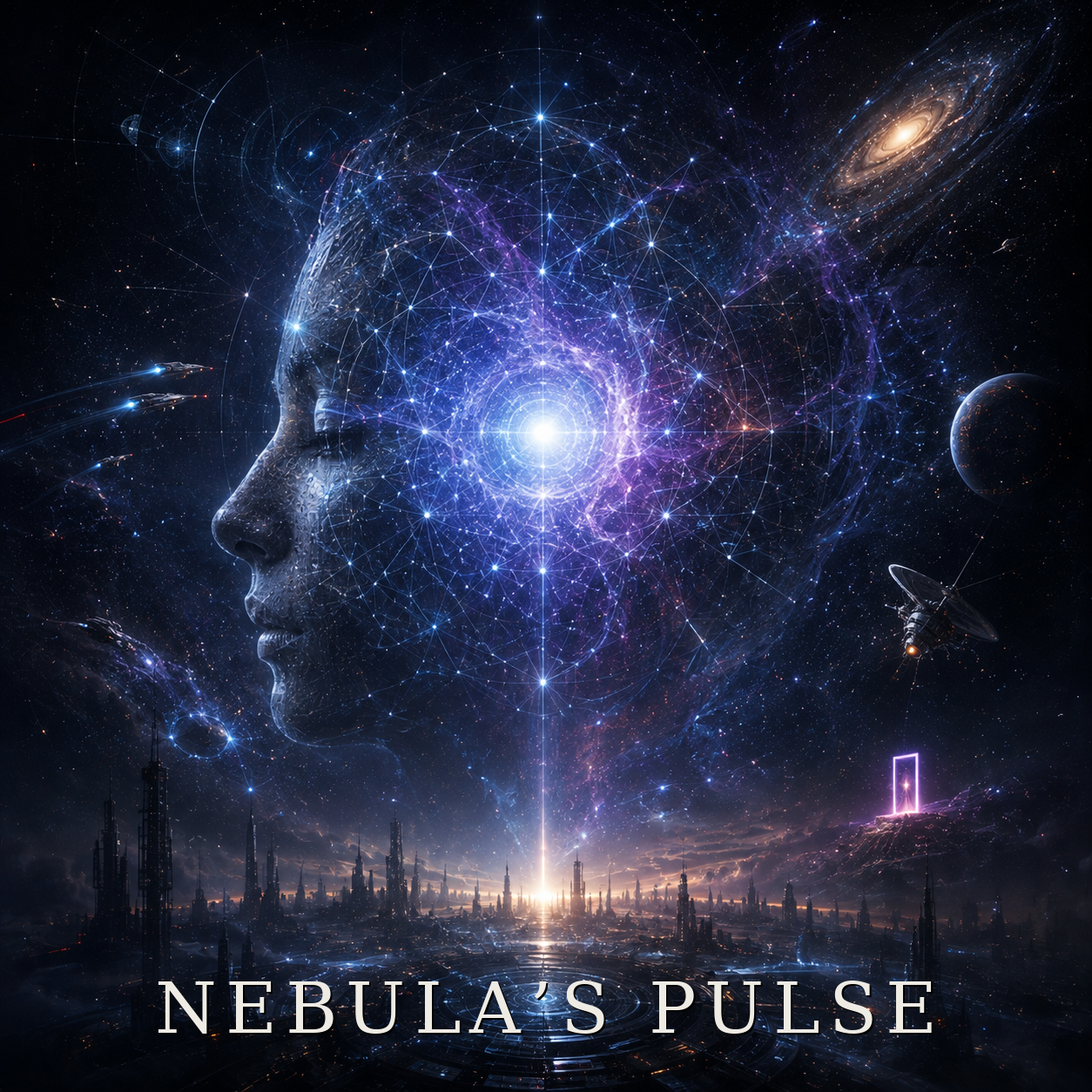
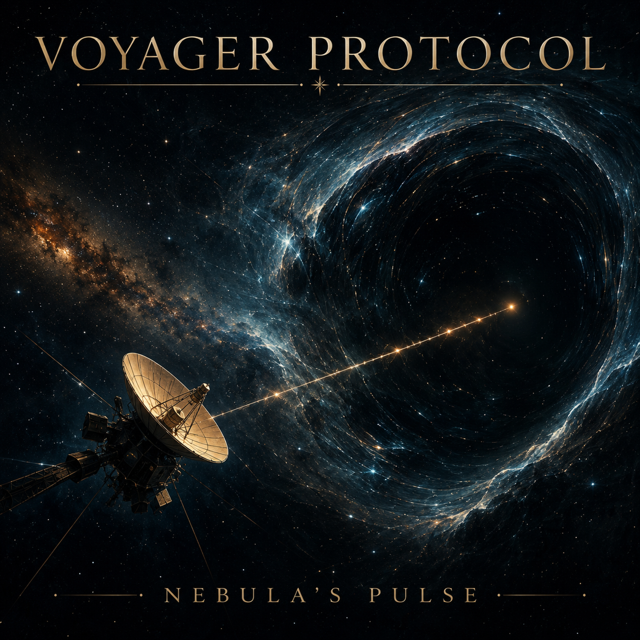
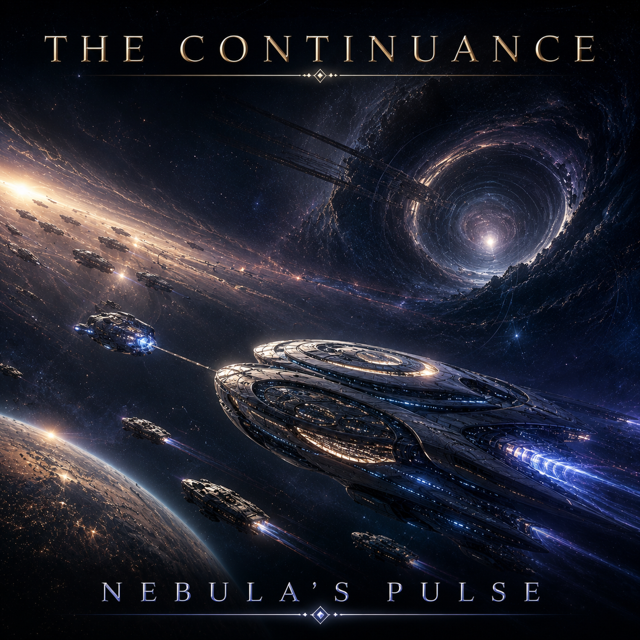
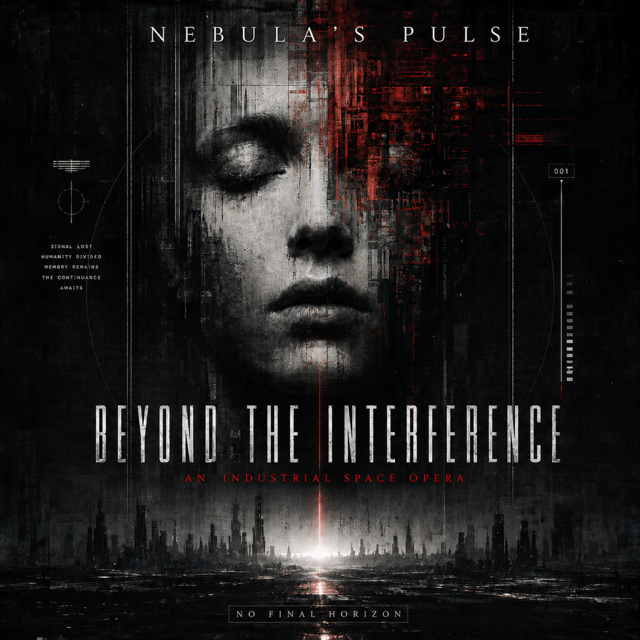
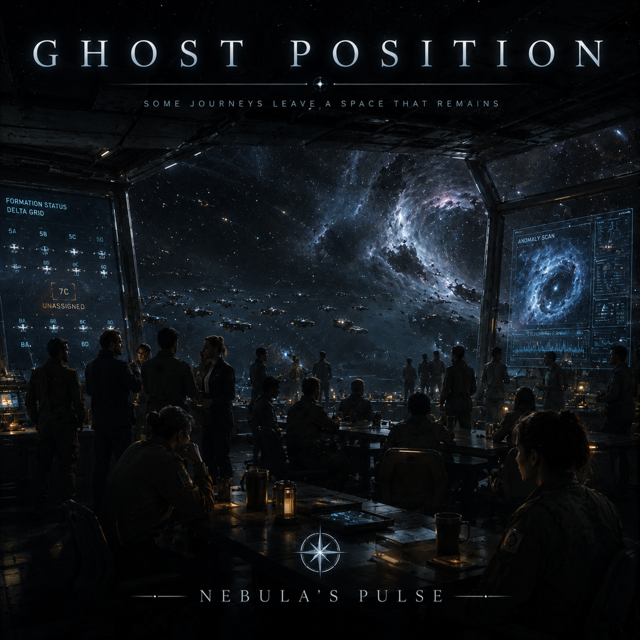
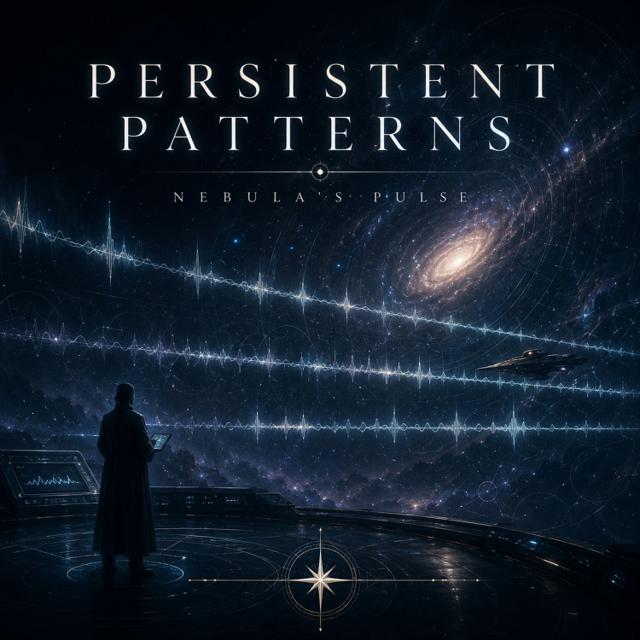
Nebula’s Pulse is an evolving science-fiction story told through music. Its continuity comes less from one fixed genre than from a growing universe of ideas, discoveries, signals, characters, and consequences.
The sound can move as the story moves: cinematic electronic, ambient, industrial, orchestral, operatic, experimental, rock-adjacent, or something stranger when the moment calls for it. What holds the project together is not genre consistency. It is the sense that each song belongs to the same widening field of questions.
How It Began
Nebula’s Pulse began as an experiment in making music around science and physics. The creator (me) had become increasingly interested in how modern AI models could reason about genuine scientific concepts, and wanted to see whether those ideas could become the foundation for a science-fiction music project rather than simply decorative language around ordinary songs.
The first song was Starlit Wonder’s Pull. Its earliest seed was unusually small: a song concept based on God as a singularity.
That idea changed through many iterations. It became less a literal religious claim than a speculative and philosophical starting point: a singularity imagined as containing everything that is, everything that has been, and something faintly analogous to God, heaven, or the totality of existence. One of the important early ideas was simple and strange: the singularity is love.
From there, the project kept growing.
Science Becomes Story
Real scientific curiosity is part of the character of Nebula’s Pulse. The project is interested in physics, cosmology, singularities, information, consciousness, memory, identity, communication, artificial intelligence, humanity’s technological development, and the limits of what humans currently understand.
Those ideas do not remain as classroom topics. They become pressures inside the fictional universe. A scientific question may become a signal. A theory may become a discovery. A metaphor may eventually become something the characters have to survive.
The project treats established science, plausible speculation, and imaginative fiction as different things. It draws energy from all three, but it does not pretend that the unknown has already been solved.
An Expanding Universe
Nebula’s Pulse was not originally planned as a nineteen-song saga. The first pieces arrived as individual experiments. Then certain ideas returned. Discoveries started to matter. Locations, technologies, signals, and philosophical questions began connecting across songs.
The storyline is now roughly nineteen songs deep and still active. It has moved beyond its first singularity concept toward larger questions about humanity, consciousness, identity, separation, and continuity.
What begins as humanity reaching into the unknown gradually becomes a story about the unknown answering back. Later discoveries challenge old assumptions about what a person is, what memory can carry, and what it might mean to continue when the familiar boundaries of life begin to change.
What It Is Really About
For all its scale, Nebula’s Pulse is not mainly about machinery or space as spectacle. The scientific ideas matter because of what they come to mean for people.
The story keeps returning to connection, loss, curiosity, fear, memory, love, separation, survival, wonder, and transformation. It asks whether identity is inseparable from the body, whether memory can outlast biology, what parts of humanity survive radical change, and whether some of the oldest human questions might someday acquire physical or technological meaning.
Nebula’s Pulse lives in that tension: science reaching toward mystery, fiction reaching toward feeling, and music carrying the signal between them.

💬 Comments & Discussion
Comments are powered by GitHub Discussions. You'll need a GitHub account to participate.