Building an AI Band: Creating Music with Codex & ChatGPT 5.6
Joe Hackman returns to the podcast with a look at what changed while he was away, not just in AI, but in the way he now uses it to build things.
Joe Hackman returns to the podcast with a look at what changed while he was away, not just in AI, but in the way he now uses it to build things.
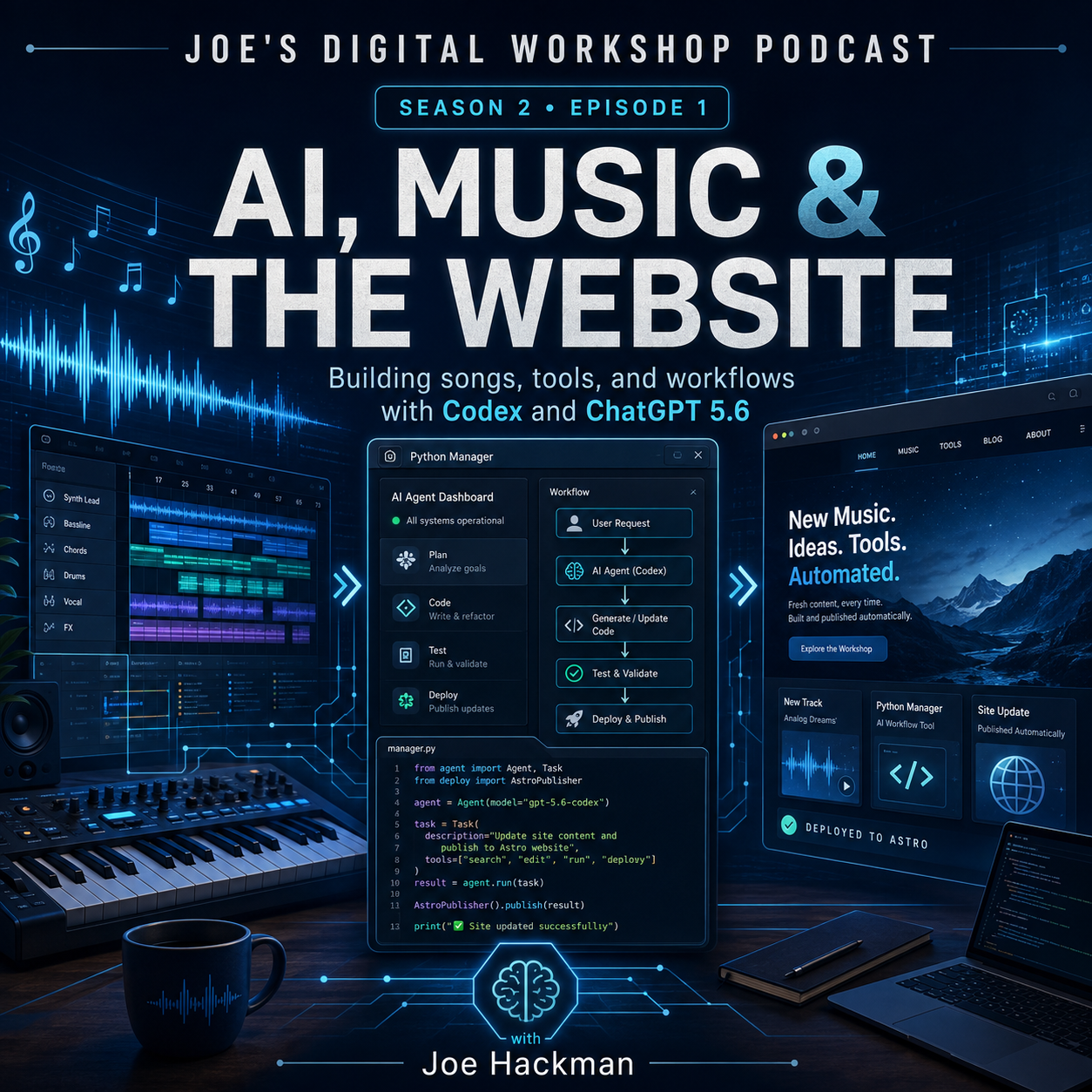
What started as an experiment in producing music with AI grew into a much larger project: new fictional artists, releases, artwork, stories, and eventually an entire music section inside Joe’s Digital Workshop. But the more interesting story is the infrastructure behind it. Joe describes pairing ChatGPT 5.6 as a kind of software engineer, helping define architecture, scope, validation, and detailed implementation plans, with Codex acting more like the programmer carrying those plans into the codebase.
That division of labor has changed the development experience. Instead of spending hours iterating line by line with an AI coding assistant, Joe can increasingly define what a system should do, hand a carefully structured directive to Codex, and walk away while it works through a substantial implementation. After years of periodically asking whether agentic AI was really ready, this feels much closer to the point he had been waiting for.
The episode follows that idea into a practical example. Joe explains how he built a Python-based GUI to manage the artists and releases on his Astro website, replacing much of the friction of a conventional CMS with a purpose-built workflow. The tool can pull hidden metadata from DistroKid’s HyperFollow pages, populate release information and streaming links, manage artist and song content, and create consistent updates to the website. Because the same AI conversations often contain the notes, lyrics, artwork concepts, artist histories, and creative decisions that produced the music in the first place, they can also become source material for documenting it.
That leads to the experiment at the center of this episode: extending the same Python interface beyond music so it can manage the podcast itself. This Season 2 opener is intended to become one of the first episodes published to Joe’s Digital Workshop through that new workflow, meaning that if you’re reading the episode on the site, you’re also looking at part of the experiment succeeding.
Along the way, Joe reflects on why he deliberately waited for AI development tools to mature, what he learned from earlier work in Cursor, why explicit instructions about scope and validation make such a difference with coding agents, and why he now thinks it may finally be time to start building his “army of robots” for research, marketing, monitoring, and other recurring work.
The result is less a discussion about any one AI product than a snapshot of a larger transition: from using AI as a tool you continually operate to designing workflows where AI can increasingly take an assignment, execute it, validate the result, and hand the work back.


💬 Comments & Discussion
Comments are powered by GitHub Discussions. You'll need a GitHub account to participate.